What was reported
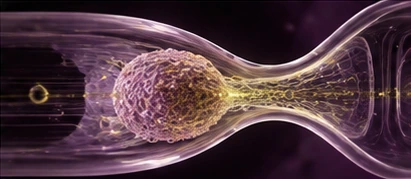
Controlled microfluidic compression improved several features of late-passage stem cells: lower oxidative-stress and senescence-associated signals, improved proliferation, and retained stem-cell characteristics. The authors also reported better wound closure in vitro and tissue repair in preclinical experiments.
What the study measured
Proliferation, identity markers, stress readouts, and preclinical repair.
Sample and setting
Sample sizes were not extracted for this brief.
What this does not establish
The intervention processed cultured cells outside the body. It does not show that pressure, vibration, or massage rejuvenates a person. Manufacturing repeatability and long-term cell safety require separate study.
The next question
Does a reproducible mechanical processing window improve function without selecting an abnormal surviving subpopulation?
This is Karam’s proposed follow-up question, not a claim that the original authors or Karam have already resolved it.
The source record
Soo Bin Jang, et al.
Small · 2026-09-09
Publisher abstract and disclosure excerpts checked. Full methods and raw data were not independently audited.