A defined sequence question comes first
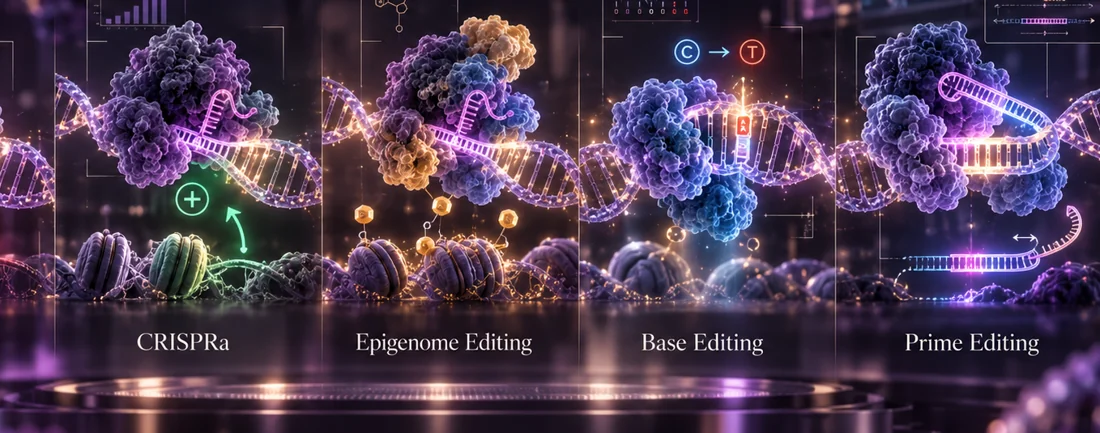
Base editing performs selected chemical conversions of DNA letters, generally without a deliberate double-strand break. Prime editing uses a nickase, reverse transcriptase and specialized guide that includes a template for a change.
The assessment treats these as candidates when a specific causal sequence defect and workable delivery route have been identified. Neither is a general-purpose explanation of how to reverse normal aging.
What prime-editing advances demonstrate
The Korean large-fragment study described in the assessment included targeted insertion in primary human T cells. That application must remain separate from performance maxima in cell lines and different mouse delivery settings.
The lipid-nanoparticle work involved mouse-liver and cellular settings, including a disease model. It demonstrates that cargo and delivery can affect performance, not that the approach reaches all human tissues.
Prediction does not replace measurement
OptiPrime is an example of mechanistic machine learning used to predict prime-editing outcomes. Prediction may narrow a search, but experimental confirmation and context-specific comparison remain necessary.
A separate publication check for this website found that the publisher’s code-availability section labels the OptiPrime code and hosted server as noncommercial-use only. A public tool is not automatically licensed for a paid workflow.
Judge the complete outcome
Useful comparison requires intended alleles, other sequence changes, structural outcomes, the assay’s blind spots and biological function. Editing percentage alone does not establish genome integrity or a therapeutic benefit.
The public comparison tool is an educational matrix, not an editor-selection approval. A real program requires a qualified team to connect the sequence objective with delivery, measurement, rights and an appropriate development path.