Cloning does not require a gene drive
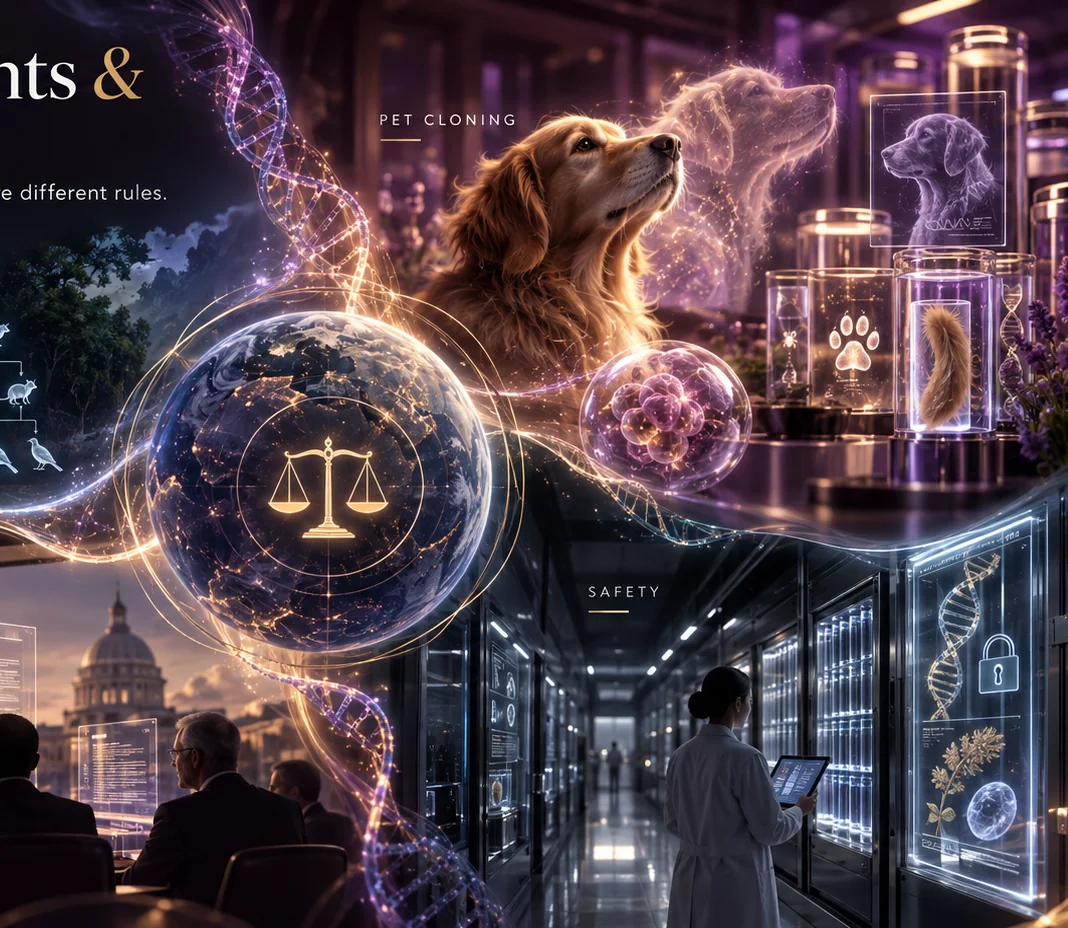
The assessment describes somatic cell nuclear transfer, or SCNT, as the established approach used for some pets. Genetic material from a body cell contributes to development of a new animal with an egg and surrogate. Ordinary CRISPR editing and population gene drives are not required.
Cloning and editing can be combined in research, but they solve different problems. Editing changes part of a genome; cloning seeks to reproduce a donor’s genetic background in a new individual.
[C38] [C39] [C40] [C41] [C42] [C43]
A later-born genetic twin, not the original life
Nuclear DNA can closely resemble the donor’s while development and gene regulation differ. Appearance may be similar, but markings, behavior and personality need not be identical.
The original pet’s memories, learned routines and relationship with an owner are not copied with the cell nucleus. A cloned puppy or kitten would form new experiences. The page does not present cloning as revival of the original individual.
[C38] [C39] [C40] [C41] [C42] [C43]
What a preservation decision needs
Current commercial processes generally depend on viable cells from suitable tissue. A DNA-test file, photograph or cremated ashes is not enough for the process described in the assessment. Suitability is case-specific.
Collection and time-sensitive sample decisions belong with a veterinarian and a qualified preservation service. Karam does not provide tissue-collection instructions or promise that a particular sample is usable.
[C38] [C39] [C40] [C41] [C42] [C43]
The Karam and Death X boundary
Cell banking may preserve a future research option, while voice, photographs, video and records preserve a different kind of information. These assets should have separate identity, permission and custody records.
No Karam cloning or veterinary preservation service is established here. A veterinary extension would require a distinct strategy, qualified providers, animal-welfare review and transparent explanation of success, losses and surrogates.