Context decision
Choose one immune-cell problem and identify which external observations are directly relevant.
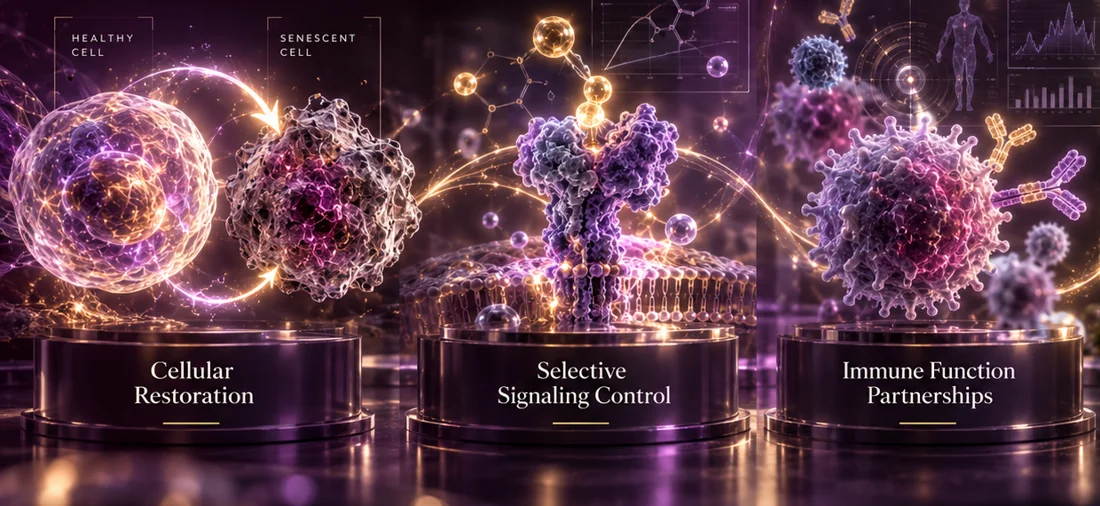
Choose the immune problem before choosing the platform.
A specialist-defined immune-cell question may support a controlled discovery partnership. T-cell tumor function and myeloid inflammatory polarization are separate candidate contexts.
Choose one immune-cell problem and identify which external observations are directly relevant.
Document actual expertise, material access, delivery context, assay competence, capacity and data rights.
An agreed scientific objective, functional readouts, independent units, safety questions and output-data requirements.
Immunology laboratory with relevant primary-cell expertise, quantitative analyst and a qualified discovery lead.
Do not advance on proliferation alone or transpose a mouse target label directly onto its human counterpart. An unwanted inflammatory direction requires reassessment.
An accountable scientific lead, authorized inputs, provider responsibilities, resources, relevant approvals, data handover, interpretation criteria and a written rights position. No named institution is presented as a contracted Karam partner.
A well-explained negative or inconclusive result can satisfy a properly scoped project. Acceptance should be based on the agreed work and evidence, not on a favorable claim.
Scientific summaries are adapted from the supplied 15 October 2026 CRISPR Project Assessment. Source records show the original references and review access; this release is not a new systematic review.
C02 — Chen ACY, Ji KY, Yerinde C, et al. CRISPR screens identify targets to rescue age-related T cell dysfunction in cancer. Cell. 29 July 2026.C08 — Jung H, Devant P, Ching C, et al. Virus-like particles enable targeted gene engineering and pooled CRISPR screening in primary human myeloid cells. Nature Biotechnology. 17 August 2026.C09 — Jung H, Jeong B, Kim YW, et al. Precise genomic integration of large DNA fragments by donor-directed annealing using prime editing. Nature Biotechnology. 28 August 2026.Scientific, analytical and laboratory partners can propose a specific contribution with evidence of their relevant work.